mirror of
https://github.com/socketio/socket.io-client-cpp.git
synced 2026-06-10 20:36:14 +00:00
 8d4fe204f1
Due to the recent changes to the Travis CI platform (see [1]), we will
now use GitHub Actions to run the tests.

Reference: https://docs.github.com/en/free-pro-team@latest/actions/guides/building-and-testing-nodejs

[1]: https://blog.travis-ci.com/2020-11-02-travis-ci-new-billing
106 lines
2.6 KiB
Markdown
Executable File
106 lines
2.6 KiB
Markdown
Executable File
# Socket.IO C++ Client
|
|
|
|
[](https://github.com/socketio/socket.io-client-cpp/actions)
|
|
|
|
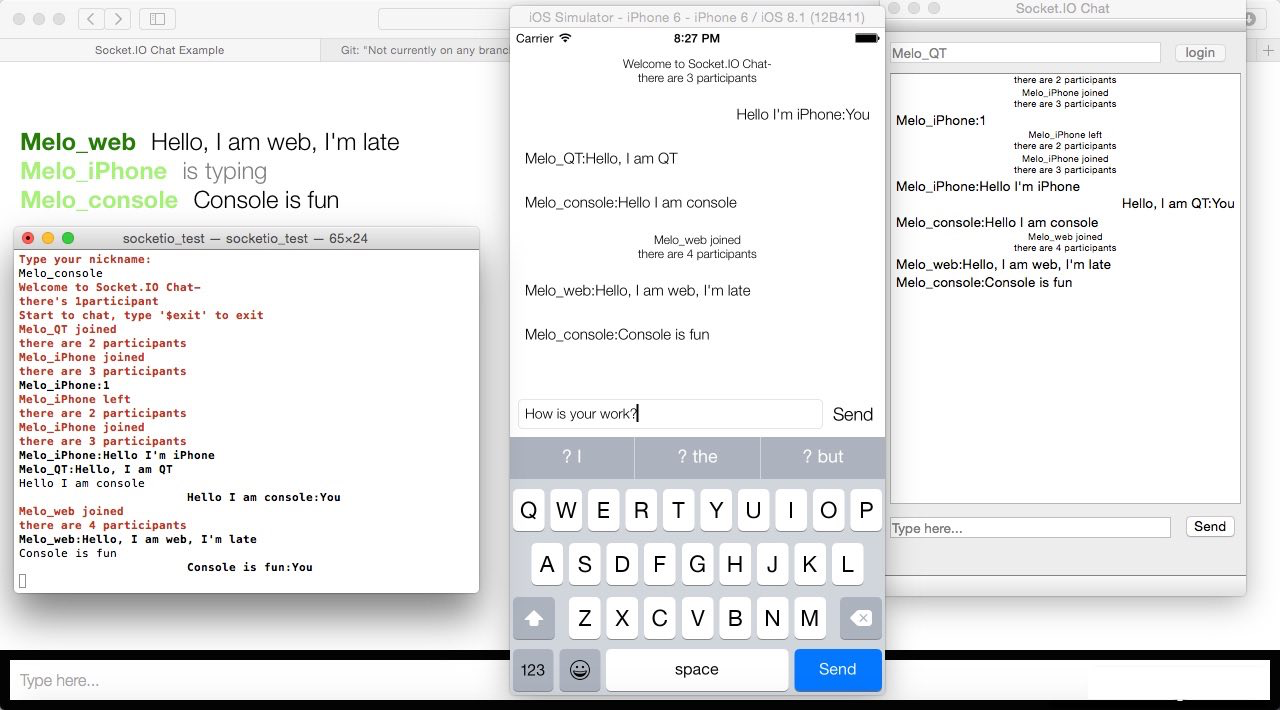
By virtue of being written in C++, this client works in several different platforms. The [examples](https://github.com/socketio/socket.io-client-cpp/tree/master/examples) folder contains an iPhone, QT and Console example chat client! It depends on [websocket++](https://github.com/zaphoyd/websocketpp) and is inspired by [socket.io-clientpp](https://github.com/ebshimizu/socket.io-clientpp).
|
|
|
|
[](https://github.com/socketio/socket.io-client-cpp/tree/master/examples)
|
|
|
|
## Features
|
|
|
|
- 100% written in modern C++11
|
|
- Compatible with socket.io 1.0+ protocol
|
|
- Binary support
|
|
- Automatic JSON encoding
|
|
- Multiplex support
|
|
- Similar API to the Socket.IO JS client
|
|
- Cross platform
|
|
|
|
## Installation alternatives
|
|
|
|
* [With CMAKE](./INSTALL.md#with-cmake)
|
|
* [Without CMAKE](./INSTALL.md#without-cmake)
|
|
* [iOS and OS X](./INSTALL_IOS.md)
|
|
* Option 1: Cocoapods
|
|
* Option 2: Create a static library
|
|
* Option 3: Manual integration
|
|
|
|
|
|
## Quickstart
|
|
|
|
** [Full overview of API can be seen here](./API.md) **
|
|
|
|
|
|
The APIs are similar to the JS client.
|
|
|
|
#### Connect to a server
|
|
```C++
|
|
sio::client h;
|
|
h.connect("http://127.0.0.1:3000");
|
|
```
|
|
|
|
#### Emit an event
|
|
|
|
```C++
|
|
// emit event name only:
|
|
h.socket()->emit("login");
|
|
|
|
// emit text
|
|
h.socket()->emit("add user", username);
|
|
|
|
// emit binary
|
|
char buf[100];
|
|
h.socket()->emit("add user", std::make_shared<std::string>(buf,100));
|
|
|
|
// emit message object with lambda ack handler
|
|
h.socket()->emit("add user", string_message::create(username), [&](message::list const& msg) {
|
|
});
|
|
|
|
// emit multiple arguments
|
|
message::list li("sports");
|
|
li.push(string_message::create("economics"));
|
|
socket->emit("categories", li);
|
|
```
|
|
Items in `message::list` will be expanded in server side event callback function as function arguments.
|
|
|
|
#### Bind an event
|
|
|
|
##### Bind with function pointer
|
|
```C++
|
|
void OnMessage(sio::event &)
|
|
{
|
|
|
|
}
|
|
h.socket()->on("new message", &OnMessage);
|
|
```
|
|
|
|
##### Bind with lambda
|
|
```C++
|
|
h.socket()->on("login", [&](sio::event& ev)
|
|
{
|
|
//handle login message
|
|
//post to UI thread if any UI updating.
|
|
});
|
|
```
|
|
|
|
##### Bind with member function
|
|
```C++
|
|
class MessageHandler
|
|
{
|
|
public:
|
|
void OnMessage(sio::event &);
|
|
};
|
|
MessageHandler mh;
|
|
h.socket()->on("new message",std::bind( &MessageHandler::OnMessage,&mh,std::placeholders::_1));
|
|
```
|
|
|
|
#### Using namespace
|
|
```C++
|
|
h.socket("/chat")->emit("add user", username);
|
|
```
|
|
** [Full overview of API can be seen here](./API.md) **
|
|
|
|
## License
|
|
|
|
MIT
|